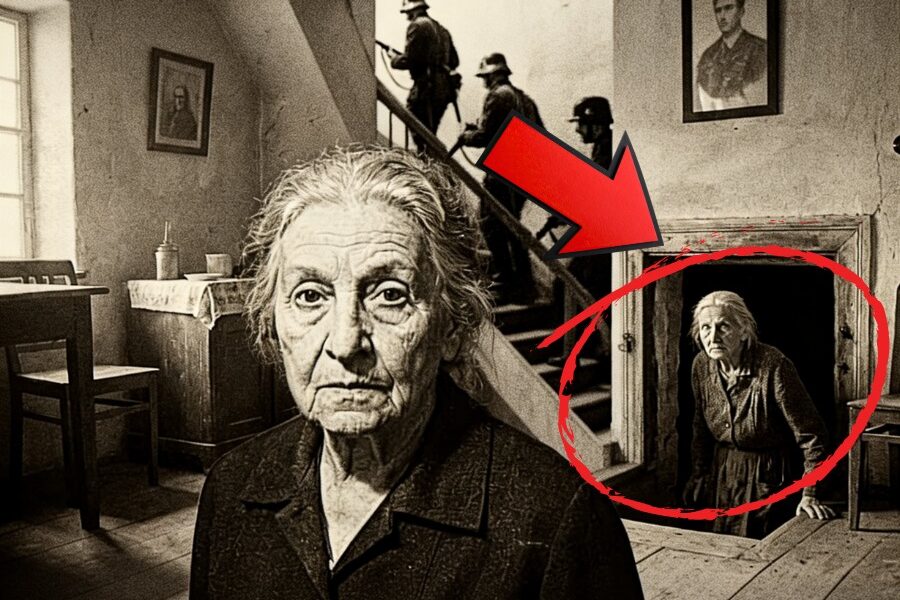
GENIUS JEWISH ELDERLY PRISONER: She Lived 5 Years Locked Inside a FREEZER and Came Back! _usww01

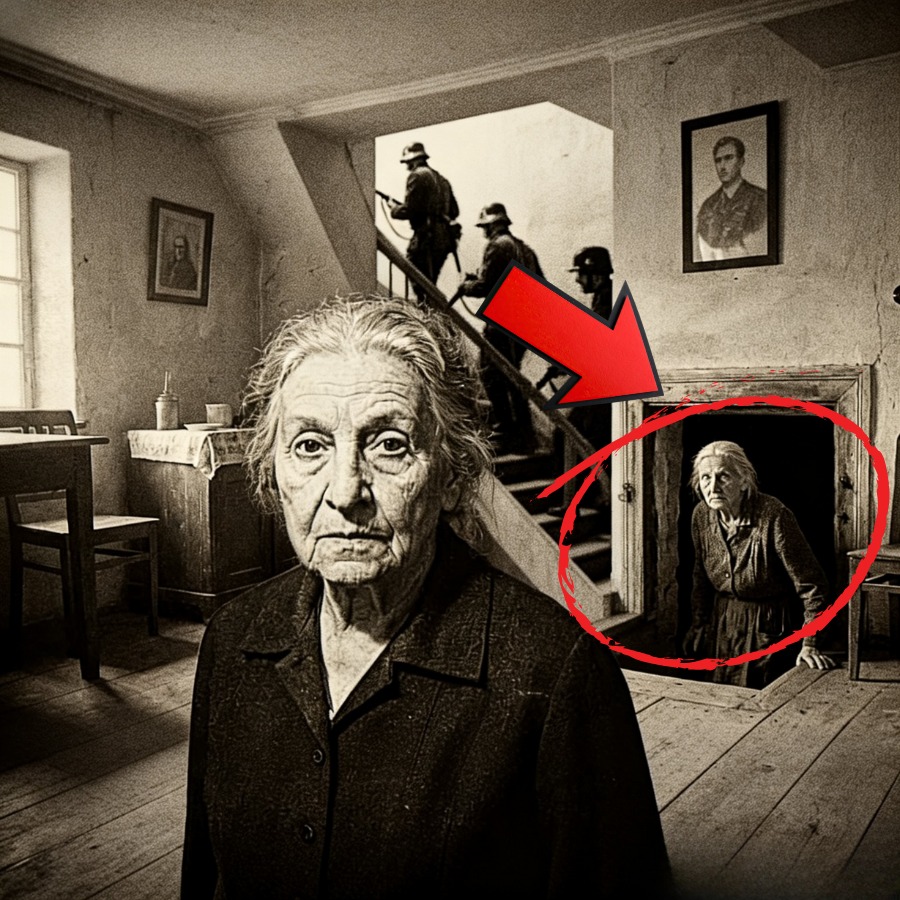
Eastern Europe, winter of 1941. A house recently confiscated by the Nazi army. An SS general lived comfortably where, until a few days before, a Jewish family had lived. In the basement of this house, there is something no one is looking for, something that doesn’t scream, doesn’t run, doesn’t leave a trace. Today you are going to hear a true story of extreme survival, a tale in which the mind conquered hunger, silence conquered fear, and intelligence transformed an ordinary object into an impossible hiding place
But let me warn you, nothing in this story happens the way you imagine. Hello, welcome to this video about war reports. Before we begin, I want to invite you to actively participate. Leave a comment telling us where you’re listening from right now and the exact time.
As you write, take a deep breath, because what you’re about to hear isn’t an escape story; it’s a story about thinking when everyone else has given up. Let’s begin. I didn’t run away when the trucks stopped in front of my house. People always ask me that. Then they ask it with indignation, as if running away were a moral obligation, as if running guaranteed survival.
But those who lived through that era know. Those who ran often died more exhausted. I was sitting at the kitchen table when I heard the sound. It wasn’t a sudden noise; it was rhythmic, heavy, a metallic beat that never deviated from the stride. Training boots, boots that don’t run, don’t hesitate, don’t rush, boots that arrive knowing they’ve already won.
I stood up slowly and parted the curtain with two fingers. I saw the gray truck stop right in front of the door. The symbol was too clear to ignore. That simple design had already wiped out entire families in the city—the SS. I didn’t feel panic. I felt something worse. Clarity. I knew this wasn’t just any raid.
They weren’t there to ask questions; they were there to occupy. My house hadn’t been mine for weeks; all that was missing was the official stamp of approval. I heard them open the door without permission. Firm voices. An officer read from a document. They pronounced my name as if I were already dead. The house, however, wasn’t. They described it in detail: square footage, number of rooms, including the basement.
When I heard the word “basement,” I understood. While they were going up to their rooms, I was going down. Each step creaked as if it wanted to betray me. I gripped the handrail tightly, not out of fear of falling, but to keep from going backward. Deep in the basement, covered in dust and neglect, lay the industrial freezer, large, old, and unused for years.
A forgotten and useless object, invisible. I didn’t think much. Thinking too much paralyzes you. I opened the lid and the smell of old metal rose like a warning. I climbed up with difficulty, bending my body that no longer obeyed well. I only took two things, a sewing needle that was in my apron pocket and a phrase from my father, “As old as another life.”
Air is invisible mathematics. If you understand the flow, you live.” I closed the lid from the inside. The sound was dry, definitive. The darkness didn’t arrive gradually; it fell suddenly. There was no light or shadow, no point of reference. My body automatically shrank. The cold metal pierced my clothes as if it wanted to banish me back to the world.
My first instinct was to take a deep breath. Mistake. The air there wasn’t endless. I realized that too quickly. I inhaled again, less air. I inhaled again, even less. My heart raced, and I hated it for that. A rapid heartbeat consumes oxygen. My father used to say that when he was taking apart ventilators and explaining to me why panic kills before lack of air.
I forced myself to stay calm. Count the seconds, I told myself. Inhale for four. Hold for two. Exhale for six. Turn your body into an obedient machine. Outside I heard footsteps, drawers opening, doors slamming, self-assured male voices arguing about where everything would go. One of them laughed.
Someone remarked that the house was too comfortable for a Jewish woman. It was gone. Time lost its shape. I can’t say how long I stood there, motionless. Minutes, perhaps hours. The cold ceased to be a shock and became a state of being. My joints ached, but I didn’t dare change position.
That’s when I heard something different. It didn’t come from outside, it came from inside. An almost imperceptible sound, an irregular breathing, a minimal flow, but real. I ran my hand along the bottom of the freezer, feeling in the dark until I found a small hole, an old, forgotten pipe, the drain pipe.
My heart was pounding, and I had to regain control. That pipe wasn’t there by chance. Industrial freezers need to drain water, and where there’s drainage, there’s circulation. Where there’s circulation, there’s a chance. I pressed my mouth against the cold metal and inhaled. The air was fetid and damp, but fresh. Air that came from outside, air that told me I wasn’t completely trapped in that white coffin.
It was there that I understood something fundamental. The freezer wasn’t a perfect prison; it was a system. And systems can be understood. Upstairs, I heard footsteps coming down the basement stairs. I froze. The door opened. Light flooded the outside, but it didn’t reach me. I heard someone talking about old junk and useless things.
The freezer lid didn’t open. When the footsteps faded, I pressed my forehead against the cold metal and closed my eyes, though I wasn’t sure if they were open. In that moment, I made a silent decision. I wasn’t going to survive by luck. I wasn’t going to survive by pity. I was going to survive by thinking, “What if I could better understand what they’re looking for? So that this freezer wouldn’t be my tomb, but my hiding place.”
At first, what hurt the most was the silence—not absolute silence, because it never is, but that silence heavy with presence, as if the world were out there breathing normally, while I had to negotiate each breath like a strange favor. The freezer wasn’t designed to hold a person; it was designed to preserve meat.
That changes everything. There’s no room to turn my body completely. There’s no comfortable position. Any movement causes pain after a few minutes, and after a few hours, the pain is no longer localized and becomes a constant state. I learned that quickly. My body reflexively tried to stretch, as if it still believed there was room.
Each time I tried, I reached the metal’s limit. The sound was muffled, but it seemed deafening. I stopped immediately. I remained still. I waited. I learned in there that the first enemy wasn’t the cold, or hunger, or the soldiers. It was the impulse, the involuntary urge to move, to cough, to sigh deeply, to exist.
Any one of these things could have given me away. I started timing my breathing cycles: inhaling briefly, holding my breath, exhaling longer—not for calmness, but for efficiency. My father always said that engines break down when they run too fast, unnecessarily. I needed to become an economical engine.
As the hours or days passed, I don’t know, my mind began to search for patterns. It always does. That’s what happens when the body can’t do anything. I ran my fingers along the bottom of the freezer again. The drain tube was there, thin, cold, metallic, but it was real. I pressed my ear against it.
I heard the basement, the distant sound of footsteps, of something dragging, of a creaking door. The world still existed, and I was still connected to it by that invisible thread of air. It was then that the memory of my father returned completely, not as a recollection, but as an instruction. He was taking apart machines in our old house and explaining things to me that I didn’t understand then, but that now seemed perfectly clear.
Every closed system must fail. If it didn’t, it would explode. Air always finds a way. I started working with the sewing needle. There was no light. I did everything by feel. I inserted the needle between the internal plates. I scraped, I forced. I listened. Every tiny creak felt like a death sentence. I stopped. I counted to 50. I started again.
My goal wasn’t to open anything visible, but to loosen, millimeter by millimeter, what was already old. The freezer was old, industrial, not built to last forever. Time had already done its work for me. After many attempts, I noticed a subtle change. The air entering the tube no longer came in only irregular pulses.
It was flowing a little better. Not much, but enough for me to realize it was working. The ventilation had improved. There, in complete darkness, sitting on the metal floor, legs tucked into my chest, I smiled for the first time since the trucks arrived. It wasn’t a smile of joy, it was a technical smile.
The smile of someone who has solved a problem. It was at that moment that I heard something I didn’t expect. A female voice, not loud, not close, a tired voice, talking to herself, complaining about something trivial. The sound was coming from the basement. My whole body froze, not out of fear, but out of calculation. A woman wouldn’t set foot down there by chance.
Soldiers don’t complain to themselves while they clean. It was someone who worked in that house, the maid. I waited. Time stretched like a thread about to snap. The woman approached. I heard things moving, a bucket, a wrung-out cloth, dripping water. My heart raced. I needed to regain control of it. If I stayed there silently, it would go away. That was the safest thing to do.
But security wasn’t enough. I needed food, water, someone who knew what they were doing. I took a deep breath through the tube and did something I never thought I would do. I spoke. Not a shout, not a complete word, just a brief whisper, almost a noise directed at the metal. Something that could be mistaken for something else, but that someone observant would notice.
The woman stopped. I heard her breathing change. The bucket fell to the floor, cautious footsteps. She approached the freezer. My whole body went on alert. If I screamed, it would all end there. If I called for someone, I’d be dead before I could breathe again. I pressed my mouth to the tube again. Don’t scream, I whispered.
The silence that followed was the longest of my life. Then I heard something that almost made me cry, but I didn’t. Crying consumes oxygen. The woman knelt, pressed her face to the basement floor, and he answered as silently as I had. “Who’s there?” In that moment, I understood something both dangerous and powerful.
I was no longer alone. But sharing a secret could be more lethal than isolation, and the next decision would determine whether that freezer would truly be my refuge or my tomb. For a few seconds, or perhaps minutes, neither of us spoke. I could hear his breathing on the other side of the metal. It was ragged, held, like someone trying not to make a sound, even when alone.
That told me more than any words. I was afraid, but I hadn’t yet decided of what. “Are you alive?” she finally asked. I didn’t answer right away. I learned too soon that every answer creates an obligation, and I needed to assess who she was before I could fully exist for her. “Yes,” I whispered. “But I can’t leave.” She didn’t move, didn’t scream, didn’t call for anyone.
She remained kneeling on the cold basement floor, as if the weight of what she had just discovered had pinned her to the ground. “They said the homeowner had run away,” she murmured. “They said you must be dead by now.” “They say a lot of things,” I replied, “not all of them are true.” There was a long silence.
I heard the distant creaking of the house, footsteps upstairs, a door slamming. The world kept turning, too normal for what was happening downstairs. If anyone finds out, it started and stopped. I know it. I added, “You’ll die with me.” That was the first rule we established, not out of cruelty, but out of honesty. True pacts begin when you talk about the risk out loud.
She took a deep breath. I heard the apron’s fabric tighten between her fingers. Then she uttered a phrase I’ll never forget. “I’ve been cleaning this house for years. No one’s ever seen me. Maybe this will be worthwhile.” That’s how it began. There were no heroic promises, no speeches, just a silent understanding between two women who knew exactly what the world did to people like us.
That night he returned later, going down to the basement while the house slept. He didn’t bring food, he brought information. The general goes to bed early, he drinks a lot. He doesn’t come down here, he whispered. But sometimes soldiers come, looking for things to steal. I pressed my forehead against the metal. Hungry soldiers are curious. Freezers attract curiosity.
Is this a serious problem? Do they open up? I sometimes asked, she replied. When they think there might be something inside. I closed my eyes. I thought quickly. I thought the way my father would, not to hide it better, but to distance myself. Are they afraid of diseases? I asked. She laughed softly.
A dry, humorless laugh, more like a gun. That’s why we need to give them something worse than curiosity. I explained the plan in short sentences, whispered through the phone. Nothing elaborate, nothing too technical, just basic psychology. Fear is most effective when it seems official. The next day I heard the sound of things being piled on top of the freezer lid.
Empty cans, bags, heavy things, dirty things. The smell of rotting garbage began to seep into the basement, but not into mine. The freezer’s thermal insulation kept almost everything out. Hours later I heard footsteps, male voices, a comment, “What’s this?” Another replied, “Leave it there, it’s marked.” The sign did the rest.
Danger, biohazard. Typhus had written it by hand, but he imitated the official style. Large, menacing letters, enough to scare away men who weren’t afraid of killing, but were afraid of slowly decomposing. The freezer is no longer just an object; it has become a warning, and I’m no longer an impromptu fugitive.
I became an active secret. Starting that week, the food began to arrive. Nothing hot, nothing cooked, nothing that smelled bad. Potato peels, turnips, raw carrots, water in well-wrung rags, squeezed through a tube. Once a week, sometimes less. “I can’t always go,” she warned. “If they suspect anything, I know,” I replied.
It’s more than enough. It wasn’t, but saying so would be dangerous. Eating has become a calculated ritual. Chewing slowly, holding food in the mouth, tricking the brain. The body complains loudly at first, then learns to complain quietly. Hunger adapts too. But there was another problem: the smell.
I knew what dogs did. I’d seen entire neighborhoods swept by trained sniffer dogs. They’d found people inside walls, under floorboards, in ovens, in places no one thought anyone could live. If dogs came, I’d be dead. That’s when I realized the advantage no one had planned for.
The freezer kept the smell inside; the steel, the foam, the old fence—everything that made the freezer unfit for food was perfect for me. The human scent clung to me; what little escaped mingled with the rotting garbage on the lid. To a trained nose, this wasn’t life; it was ancient decay. I was invisible.
When I told him this, I heard a “soo” from the other end of the line. “You thought of everything,” he said. I didn’t reply. I only think one step ahead of fear. That same week, I heard something that confirmed my calculations. Dogs in the yard, short barks, sharp commands, chains. My body went on high alert. I didn’t move.
I didn’t take a deep breath, I didn’t think of anything but becoming smaller, slower, more nonexistent. The dogs passed through the basement, sniffed, growled, and left. When the silence returned, I realized something that frightened me even more: the dogs themselves had survived. And that meant I now needed to learn how to keep surviving, because time wasn’t on my side and the body always demands what the mind postpones.
After the dogs left, I felt no relief. I felt calculation. Relief is a dangerous luxury. It makes the body lower its guard. And deep down, lowering its guard meant dying slowly. I needed to understand exactly how long a human body can hold out when food becomes the exception.
Hunger doesn’t arrive like a scream; it starts like background noise. First, the stomach grumbles at familiar moments, then it loses track of time and grumbles constantly. Then it stops grumbleing. And that’s the most terrifying thing, because the body’s silence often precedes failure. I observed each phase as if it weren’t happening to me.
I transformed suffering into an object of study, not out of coldness, but out of necessity. If I began to feel it, I would lose the ability to decide. I started with the numbers. I knew the fundamentals of physiology. I knew that the body consumes energy, even at rest. I knew that the brain, in particular, is an expensive organ. Thinking burns calories.
Overthinking could kill me as quickly as starving myself. So I did something no one does instinctively. I decided to think less about the world and more about my body. I spent entire days counting my heartbeats, measuring my breathing, feeling when my body went into energy-saving mode, when my movements slowed, when the cold stopped bothering me because I didn’t have enough energy left to feel discomfort.
The food that came through the tube was almost symbolic. Potato peels, sometimes with dirt, a piece of hard carrot. Enough water to prevent dehydration, but never enough to quench his thirst. I reasoned as if each bite were a moral decision. He chewed until it lost its texture. He held the food in his mouth. He waited for his brain to process the act of eating. It was an old trick.
My father used to talk about it when he told stories of striking workers. The body confuses time with quantity. If time is prolonged, it believes it has received more. I needed to deceive my own body. There were days when I was so weak that raising my hand seemed like an irrational effort. In those moments, I would lie motionless, breathing through the tube, waiting for my body to stop begging.
Over time, I did it, not because I was satisfied, but because I had understood who was in charge. It was during this period that I realized something else. My body was changing; I was losing weight, but not evenly. My skin seemed to be sticking to my bones. My joints became more visible.
I felt myself shrinking, as if disappearing from the inside out. Part of me celebrated. Less body meant less consumption. Less consumption meant more time. But there was a dangerous limit. If I lost too much, I wouldn’t have the strength to get out when necessary. Survival wasn’t just about continuing to breathe; it was about continuing to be able to get out.
I began to plan invisible exercises, minimal movements, almost imperceptible contractions, stretching and contracting muscles without changing posture, training the body to exist in silence. I learned to do this in complete darkness, guided only by pain and the memory of how a body should function.
Meanwhile, the outside world remained indifferent. The general drank, laughed, and received visitors. Sometimes he went down to the basement; I recognized the weight of his footsteps, the sound of his boots, the smell of alcohol mixed with leather. On one of those occasions, he stopped right above me. I heard him kick something piled on top of the freezer lid.
“What the hell is this?” he asked. “Old junk, sir,” someone replied. Marked as dangerous, there was a brief silence. My heart raced, and I had to force it to slow down. I felt dizzy, a dark vision within darkness. I thought I was going to faint right there. “Let it rot,” the general said.
This house already has too many ghosts. The footsteps faded away. I stood there with a heavy chest, reflecting on the irony. I was right. The house did have ghosts. I just hadn’t imagined one of them breathing right beneath my feet. It was during this phase that my mind began to react to the lockdown in a different way. Dreams.
These weren’t ordinary dreams; they were strange, fragmented sequences filled with numbers, formulas, and voices from the past. I would wake up not knowing if I had slept for minutes or hours. The darkness was always the same. I realized that if I didn’t deliberately occupy my mind, it would begin to create its own worlds, and I might not like them, so I did the most dangerous and necessary thing I could do.
I began to think intensely. I recreated entire textbooks in my head, recalled old lectures. I reworked math problems I hadn’t solved in ages. I created equations only to undo them later. My mind became my only free space. When the physical pain became unbearable, I retreated into it.
When my body threatened to give out, I forced it to keep pace with my reasoning. Thinking became a form of discipline. With the needle, I began to scratch the metal of the freezer. Not phrases, not words, numbers, symbols, dates, calculations. Every risk was an anchor. Every equation solved was a day gained. I wasn’t going crazy; I was getting organized.
But the body doesn’t negotiate forever. And I knew that sooner or later I would have to do something that would change everything, take it out of the freezer, even if it was just for a few minutes, even if it was dangerous, even if it was night, because staying still for too long can also kill. And when that decision matured, I knew. The real risk was yet to come.
The body gives warning before it breaks. It doesn’t scream, it whispers signals that only those who pay attention can perceive. A tremor that doesn’t go away. A muscle that takes longer to react. A thought that escapes before it’s finished. I recognized these signs with the detachment of someone reading a technical manual.
If I continued merely surviving, motionless, I would lose the ability to leave when necessary, and it would become necessary to leave. That’s when I decided to do something dangerous: to exist again, even if only for a few minutes. But before that, I needed to solve a bigger problem. The biggest problem of all was on my mind. Absolute darkness not only destroys the notion of time, it corrodes identity.
Without external references, the brain begins to withdraw into itself. Thoughts repeat themselves. Internal voices grow louder, memories surface without warning and demand attention as if they were real. I couldn’t allow that. So I built a place—not just any imaginary place, but a rigorously structured space, with rules, order, and progression.
A place where the mind could wander without getting lost. I called it university. In my mind, I entered the same room every day. The walls were light-colored, there were large windows, though I never saw the outside. The chairs were always in the same place. The blackboard took up the entire front of the room. There, I wasn’t a woman in hiding; I was a teacher.
I started with something simple. I reviewed basic concepts, definitions, and old theorems. Then I moved on to more complex problems, lengthy proofs, and calculations that required total concentration. When he made a mistake, he went back to the beginning; when he got it right, he kept going. This method had a powerful side effect.
Time existed again, not as hours or days, but as progress. I knew I had made progress when a problem was solved. He knew he had made progress when a sequence made sense. The freezer disappeared. Sometimes I spent entire days in that place. By the time physical pain forced me to return, I was already mentally exhausted, and that was good.
Mental exhaustion silences panic. With the needle, I began to record everything on the inside walls of the freezer, not to remember it later, but to confirm my authenticity. I scratched formulas onto the aluminum, numerical sequences, approximate dates, small mental maps transformed into symbols. If someone were to see that someday, they might think it was madness. It wasn’t.
It was maintenance. It was during one of these mental sessions that I realized something alarming. My legs were getting too weak. I could contract the muscles, but the strength was diminishing. The cramped space prevented any wide range of motion. The risk of atrophy was real. I needed to leave.
Not always, not often, but enough. I spent weeks observing patterns, not with my eyes, but with my ears. I learned to recognize each resident of the house by the sound of their footsteps, their weight, their rhythm, their shuffling. I knew who came downstairs at night, who never came downstairs, who drank too much to understand anything. The general went to bed early.
The maid always left the basement before midnight. After 3 a.m., the house fell into a peculiar silence. A silence devoid of expectation. That was my respite. The first time I decided to go out, my hands were shaking so much I thought I’d give up. I opened the lid just enough to push it back in.
The basement air rushed in, a smell of dampness, dust, something too alive. I left slowly, my legs barely responding. I stood there, clinging to the edge of the freezer, feeling the world spin. There was no light, only blurry shadows. Still, I felt free. I took two steps. Then three. The silence was absolute.
Each beat of my heart felt like an alarm. I stretched my legs as far as I could without making a sound. My muscles ached as if they were being forcibly awakened. I drank water from a leak in the corner of the basement. Cold water that tasted of rust. Nothing had ever felt so necessary. 15 minutes.
I had calculated that this was the maximum safe time. If it went on longer, the risk of someone waking up increased. If it was shorter, the body wouldn’t benefit at all. I went back. Entering the freezer was harder than leaving. The body resists confinement after feeling space; I had to fight the urge to just stand there, breathing fresh air.
I closed the lid carefully. Darkness returned like a breath. But something had changed. I knew I could get out. I knew I wasn’t completely trapped. From that night on, I repeated the ritual once a week, always at the same time, always with the same care, always returning before dawn. It saved me, but it also brought me closer to the edge because going out was dangerous, and each time you went out, the likelihood of making a mistake increased.
I knew I couldn’t do this forever, that something would change eventually. The war wouldn’t last forever, nor would the house or the general. And when that day came, I needed to be prepared physically, mentally, whole enough to let the light in when the lid finally opened. Without realizing it, I was already counting down the last few days, and the silence of the house began to shift.
The silence changed before I even realized it. It wasn’t the absence of sound, it was the absence of routine. For years I had learned to recognize the house by what I repeated: footsteps, schedules, voices, doors. The war had its own rhythm, even amidst the chaos. And suddenly that rhythm began to falter. First, the general’s footsteps disappeared.
No heavy boots on me, no drunken laughter, no tedious orders. Then the soldiers stopped going down to the basement. The garbage stopped piling up. The house began to sound hollow. I didn’t celebrate. Experience had taught me that change is more dangerous than known threats. A predictable system, however cruel, still allows for calculation.
A system that collapses generates errors, and errors kill. I spent entire days motionless, listening. The maid took a while to return. When she did, her steps were different, lighter, hurried. There was something urgent in her breathing. She knelt beside the freezer. “They’re gone,” she whispered. The general fled. The house was left abandoned.
I didn’t answer. Not because I didn’t believe it, but because the idea of leaving was too overwhelming to contain at that moment. Five years of living with the certainty that opening the lid meant death had shaped my body and mind. Freedom didn’t seem safe; it seemed like a trap. “Wait,” I said, “wait a little longer.”
“She waited two days, maybe three. Time was still unstable for me. No patrol returned, no strange voices crossed the house, only the wind, the creaking of the wood, a world relearning to exist. Last night I didn’t sleep. I sat inside the freezer with my back against the metal. Breathing for the last time through the tube.”
I ran my hand along the inside walls. I touched the lines, the formulas, the tally marks. My whole history was there. When the lid finally moved, the sound was unlike anything I remembered. It wasn’t abrupt, it wasn’t violent, it was a weary creak, as if the freezer itself was resisting giving me back. The light burst in like an attack.
I closed my eyes immediately. The pain was physical, direct, unbearable. My whole body tensed. My head spun. For a moment I thought I would faint right there between the darkness I knew and the light that no longer seemed real. I felt firm, careful hands. “Slowly,” the maid said. “Slowly.
She helped me out. My feet touched the basement floor and I almost fell. My legs no longer remembered how to support my entire body. They trembled, they protested. Every muscle seemed to question whether this was really necessary. I stood for a few seconds, then sat down, then breathed. The basement seemed enormous, tall, full of echoes.
I had lived for years in a space where I could barely stretch my legs. This felt like another planet. When I finally managed to open my eyes, I saw the freezer for the first time since I’d walked in. White, old, covered in dried garbage, with a sign hanging on the side, still legible. Danger, biohazard. I smiled, not out of humor, but out of recognition.
I climbed the stairs with help. Each step was a negotiation with my body. The house was empty. Furniture out of place, boot prints on the floor, vestiges of an occupation that now seemed like a nightmare. When I reached the room, daylight flooded in through the windows and hit me hard.
I had to close my eyes again. The world was too noisy, too vast, too alive. I didn’t cry. Crying requires an emotional release I couldn’t yet allow myself. I had survived because I had everything under control. Letting go of control at that moment seemed dangerous. The maid brought me water, a full glass.
I held it with both hands. Its weight felt excessive. I drank slowly. Each sip was a confirmation. I’m here. I’m outside. I’m alive. She looked at me as if I were something fragile and impossible at the same time. “How did you do it?” she finally asked. I thought before answering, not because the answer was difficult, but because I needed to be precise.
“I turned fear into problems,” she said, “and problems into calculations.” She nodded, though she didn’t quite understand. Days later, the doctors said it was impossible, that a body couldn’t survive like that, that my mind must be shattered, that I must have gone mad. They missed one fundamental point. I didn’t survive despite the confinement.
I survived by organizing the lockdown. The freezer wasn’t just a hiding place; it was a system, and I became part of it. When people ask me today how I managed to get through those five years, I don’t talk about bravery, I don’t talk about luck, I don’t talk about faith. I’m telling the truth. While the outside world burned, I used math, psychology, and silence.
I didn’t wait to be rescued. I remained functional until the opportune moment, and then I’ll add something few people like to hear. Survival isn’t about resisting by screaming. It’s about resisting by thinking. And that’s how I got out of the freezer. Teira, a living old woman.