She could pass for German if she wanted to. Blood runs down her face from where a soldier hit her with a rifle butt _us6040

SS Officer Put a Gun to Her Head — She Smiled, Then Killed 93 of Them in One Night
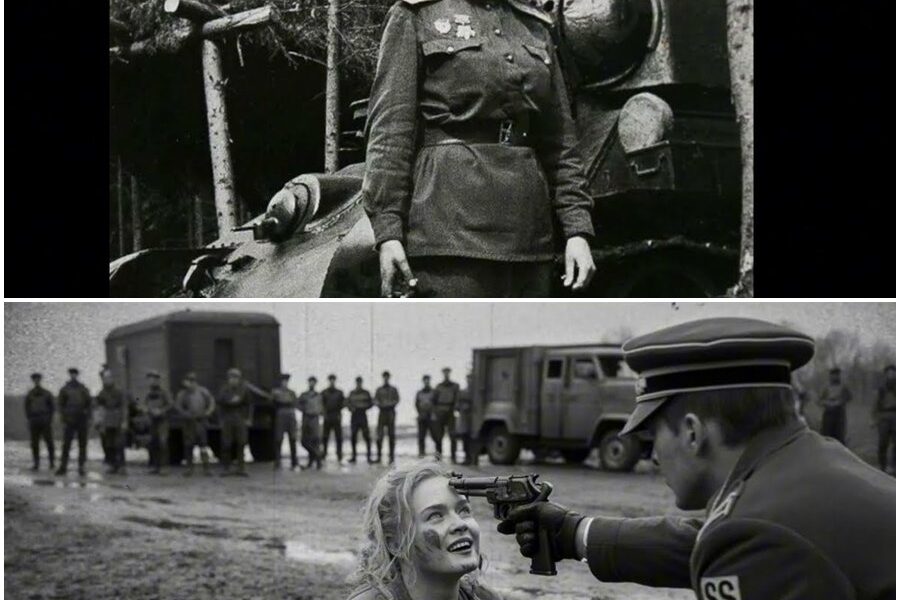
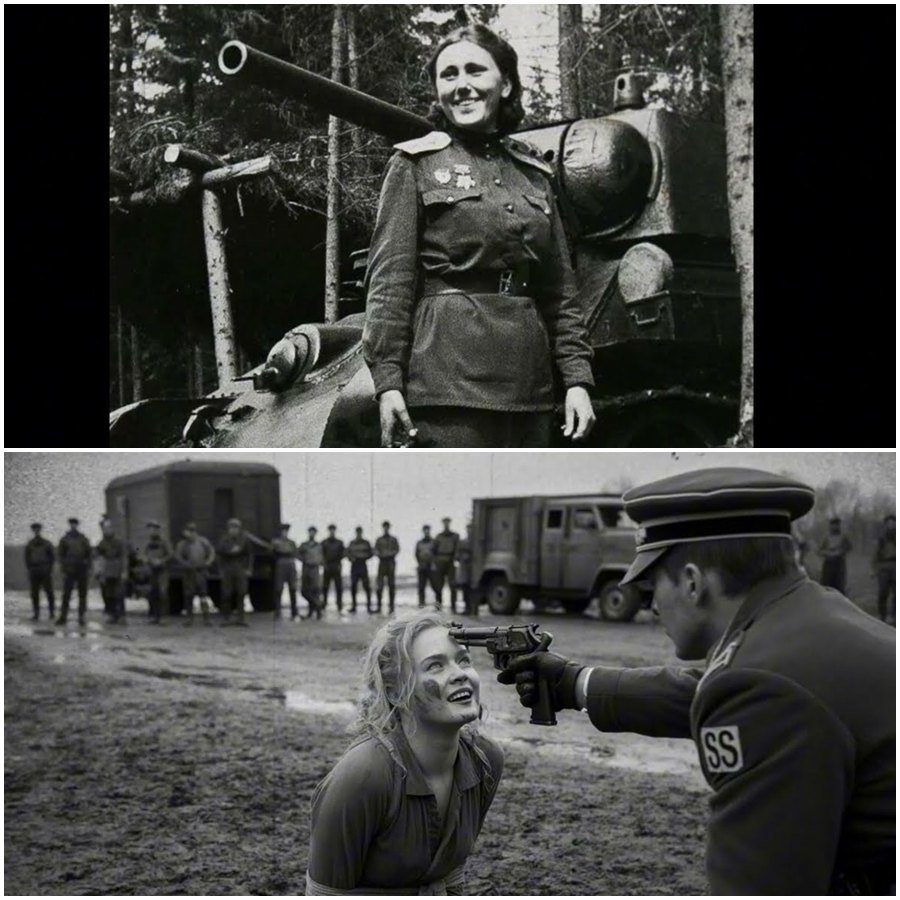
March 17th, 1944, 11:23 at night, a village square in Barus. SS Hopstrom Fua Claus Eert presses his Walther P38 pistol against the forehead of a young woman kneeling in the mud. Tell me where the partisans are hiding, he says in German. Or I will kill you. The woman looks up at him. She’s maybe 22 years old, blonde hair, blue eyes.
She could pass for German if she wanted to. Blood runs down her face from where a soldier hit her with a rifle butt. Her hands are tied behind her back. She’s surrounded by 40 SS soldiers, two armored cars, and a halftrack. She smiles. Not a nervous smile, not a defiant smile. A genuine smile like she just heard the funniest joke of her life. Eert is confused.
People about to die don’t smile. They beg. They cry. They bargain. They curse. They don’t smile. What is so funny? Eert demands. The woman speaks in perfect German. No accent. You think you captured me? That’s what’s funny. Edbert’s finger tightens on the trigger. Last chance. Where are the partisans? The woman’s smile widens. Behind you.
Eert starts to turn. Too late. The village explodes. Gunfire erupts from every window, every doorway, every rooftop. Machine guns, rifles, grenades. The SS soldiers scatter, diving for cover, returning fire. But they’re in a kill box. The entire village is a trap. And the woman kneeling in the mud isn’t a prisoner. She’s the bait.
Her name is Maria Octiabiskaya. The Soviets call her ma Maria the loner. The Germans call her Don Todd, the smiling death because she smiles when she’s about to kill you. That smile is the last thing 93 German soldiers will ever see. This is the story of how a 22-year-old woman became the deadliest Soviet partisan in Bellarus.
How she killed over 400 German soldiers in two years. How she drove a T34 tank she bought with her own money into battle after battle. How the SS put a 100,000 Reichs mark bounty on her head more than any other partisan in the Eastern Front. and how she died at age 24 ramming her tank into a German anti-tank position while laughing over the radio.
Maria Octi Aabiscaya was born August 16th, 1920 in the Crimean Peninsula, southern Russia, a region of farms and vineyards on the Black Sea coast. Beautiful country. Her father was a peasant farmer. Her mother died giving birth to Maria’s younger brother when Maria was six. Her father raised four children alone during the Russian Civil War and the chaos that followed the Bolevik Revolution.
Life was hard. Food was scarce. The Civil War killed millions. White Russians fought red Russians. Foreign armies invaded. Bandits roamed the countryside. Maria’s childhood was hunger, fear, and survival. She learned early that the world was cruel. That if you wanted to survive, you needed to be cruer. At age 8, Maria watched her father beaten to death by soldiers.
They were looking for hidden grain. Her father said he had none. They didn’t believe him. They beat him with rifle butts in front of his children. Maria watched him die in the dirt. The soldiers never found grain because there was none. Her father had told the truth. They killed him anyway. Maria and her siblings survived on their own, begging, stealing, doing whatever was necessary.
Maria became hard, not cold, hard. Like steel that’s been forged in fire. She smiled a lot. People remember that. Even as a child begging for food, she smiled. It wasn’t happiness. It was something else, something darker, like she knew a secret no one else knew. 1932, age 12, Maria joined a communist youth organization. Not because she believed in communism, because the organization provided food, shelter, and education.
Maria learned to read and write. She learned mathematics, history, political theory. She was smart, very smart. Top of her class in everything except social skills. She didn’t make friends easily. She smiled, but she didn’t let people close. 1935, age 15, Maria joined the Red Army. Women could serve in the Soviet military, though usually in support roles.
Nurses, radio operators, clerks. Maria didn’t want support roles. She wanted to be a soldier. The recruiting officer looked at this 15-year-old girl and laughed. She was 5’3″ in tall, maybe 90 lb. She looked like a strong wind would blow her away. Maria said, “I can shoot better than any man here.” The recruiting officer said, “Prove it.
” They went to a rifle range. Gave her a Masan Nagant rifle. Standard Soviet infantry weapon, heavy, brutal recoil. The officer set up targets at 100 m. Said, “Hit three out of five and we’ll talk.” Maria hit five out of five. Center mass. The officer moved the targets to 200 m. She hit five out of five. 300 m. 5 out of five.
The officer was impressed but not convinced. Shooting targets is different from shooting men. He asked her why she wanted to be a soldier. Maria said, “I watched my father die. I will kill the people who did that.” The officer said, “Your father was killed by bandits during the Civil War. They’re long dead.” Maria said, “Then I’ll killwhoever takes their place.
Someone is always trying to kill us. I want to kill them first.” The officer enlisted her, put her in a training battalion, basic infantry training, marching, shooting, hand-to-hand combat tactics. Maria excelled at everything. She was too small for hand-to-hand combat in any conventional sense. In a fair fight, any male soldier would destroy her.
But Maria didn’t fight fair. She went for eyes, throat, groin, dirty fighting, brutal fighting, fighting to kill, not to win points. Her instructors didn’t like her. She was too aggressive, too violent, too willing to actually hurt people during training exercises. Other soldiers were afraid of her.
Not because she was physically intimidating because there was something wrong in her eyes. Something broken. Like she didn’t value life the way normal people did. Not even her own. 1937, age 17. Maria was assigned to a rifle regiment stationed in Ukraine. Peacetime duty. Boring. Lots of training exercises and maintenance work. Maria hated it.
She wanted to fight, wanted to kill, but there was no war to fight. Then she met Ilia Octiabiski. He was a tank commander, 25 years old, handsome, confident, everything Maria wasn’t. He courted her for 6 months, brought her flowers, wrote her letters, made her laugh, real laughs, not the dark smiles she usually wore.
Ilia saw something in Maria that other people didn’t. He saw past the hardness, past the violence. He saw a girl who’d been hurt and learned to hurt back. They married in 1938. Maria was 18. Ilia was 26. They were happy, as happy as two soldiers could be. They served together, trained together, dreamed together about a future when they could leave the military and have a normal life.
Children, a farm, maybe something peaceful. Maria softened. She smiled more. The darkness receded. She started making friends, started caring about people. Ilia changed her, made her human again. For 3 years, Maria Octi Aabiskaya was almost normal. June 22nd, 1941, Germany invaded the Soviet Union.
Operation Barbarasa, the largest invasion in human history, 3 million German soldiers, 3,000 tanks, 7,000 artillery pieces. They crashed across the border in a wave of fire and steel. The Soviet Union was not ready. Stalin had ignored warnings. The Red Army was caught completely offguard.
In the first week, the Germans advanced 300 km. Entire Soviet armies were surrounded and destroyed. Hundreds of thousands of soldiers surrendered. The Germans captured so many prisoners they couldn’t process them. They herded them into open fields and left them to starve. Maria and Ilia’s unit was in the path of the invasion.
They fought, fell back, fought again, fell back again. The Germans had better tactics, better equipment, better coordination. The Soviets had numbers and desperation. It wasn’t enough. Not in those early months. August 1941, Ilia’s tank was hit by German anti-tank fire. The tank brewed up. That’s what tankers call it when a tank catches fire.
The ammunition cooks off. The crew burns alive. Ilia was the commander. He tried to get his crew out. He got three of them out. He went back for the fourth. The tank exploded. Ilia died instantly. Maria watched it happen. She was 200 m away. Saw the tank get hit. Saw it catch fire. Saw Ilia pull men out. Saw him go back in. Saw the explosion.
Saw pieces of the tank fly through the air. Saw smoke and flames where the man she loved had been 5 seconds ago. Something broke inside her. Or maybe something that had been broken years ago. Something Ilia had temporarily fixed broke again permanently. This time the darkness came back. The smile came back. But now the smile meant something different.
Now it meant you’re going to die and I’m going to enjoy watching it happen. Maria’s unit was evacuated east, retreating before the German advance. The Soviet Union was losing badly. By December 1941, the Germans were at the gates of Moscow. Lennengrad was under siege. Millions of Soviet soldiers were dead or captured.
The country was on the verge of collapse. But the Germans made mistakes. They advanced too far too fast. Their supply lines stretched thin. Winter came early and hard. The German soldiers weren’t prepared for Russian winter. Temperatures dropped to 40 below zero. Tanks wouldn’t start. Oil froze. Fingers froze. Weapons jammed.
The Blitzkrieg ground to a halt in the snow and ice. The Soviets counterattacked. December 1941 drove the Germans back from Moscow, not far. Not a decisive victory, but enough to prove the Germans weren’t invincible. Enough to give the Soviet Union hope. Maria was part of that counterattack. She’d been assigned to a rifle company, basic infantry.
She fought in the winter offensive, killed her first German soldiers. She doesn’t remember how many. She just remembers the smile on her face while she did it. The warmth in her chest. The feeling that finally, finally, she was doing what she was meant to do. The war groundon through 1942.
The Germans attacked south toward the Caucus’ oil fields. The Soviets fought back. Millions died. The Eastern front became a meat grinder. Entire armies were destroyed and rebuilt and destroyed again. Maria fought through all of it. She was wounded three times. shrapnel, bullet wounds, nothing that stopped her for long.
She always came back, always kept fighting. Her commanders noticed her. She volunteered for the most dangerous missions, assaults on German positions, reconnaissance patrols deep into enemy territory. She never hesitated, never showed fear, never backed down. She killed Germans with a rifle, with a knife, with her bare hands when necessary.
She became known as someone you wanted on your side in a fight, someone who wouldn’t break. November 1942, Stalingrad, the battle that would turn the war. The Germans had pushed into the city, blockby block, fighting, building by building, room by room. The most brutal urban combat in history. Maria’s unit was sent to Stalingrad. They fought for three months in the ruins, in the sewers, in the rubble, killing Germans at pointblank range.
Maria thrived. This was her element. Close quarters, brutal, personal. She could look Germans in the eyes while she killed them. February 1943, the Germans at Stalingrad surrendered. 90,000 German soldiers marched into captivity. Most would never return. The tide had turned. The Soviets were winning now, slowly paying in blood, but winning.
Maria was promoted to sergeant, given command of a rifle squad. She led her men well. They followed her because she never asked them to do anything she wouldn’t do first. She led from the front always. If there was a dangerous position to assault, Maria went first. If there was a patrol into enemy territory, Maria led it.
Her men loved her and feared her in equal measure. June 1943, Maria was wounded again badly this time. Grenade shrapnel tore through her left leg and abdomen. She was evacuated to a field hospital. The doctor said she’d live, but she wouldn’t fight again. The leg was too damaged. She’d have a permanent limp. She was being invalidated out. Maria refused.
Said she would return to combat. The doctors said it was impossible. She couldn’t march, couldn’t run, couldn’t keep up with a rifle unit. Maria said then I won’t be in a rifle unit. She had an idea. Ilia had been a tank commander. Maria knew about tanks. She’d listened to Ilia talk about them for 3 years.
She knew how they worked, how to drive them, how to fight in them. Tankers didn’t march. Tankers rode. A damaged leg didn’t matter if you were sitting in a tank. The problem was the Soviet Union didn’t just hand out tanks. Tanks were expensive, precious. The factories couldn’t build them fast enough. Every tank went to the front.
There was no spare tank to give a crippled sergeant just because she wanted one. Maria sold everything she owned. her clothes, her medals, her wedding ring, everything Ilia had left her. She saved every ruble of her military pay. She begged, she borrowed. She wrote letters to party officials. She campaigned for 6 months.
She fought bureaucracy harder than she’d fought Germans. Finally, she scraped together enough money, 50,000 rubles, enough to buy a T34 tank. The Soviet government had a program. Citizens could donate money for the war effort. Donate enough and they’d name something after you. A tank, a plane, a ship. Usually, it was propaganda.
Rich party members donated and got their names on equipment operated by regular soldiers. Maria donated 50,000 rubles, but she didn’t want her name on a tank. She wanted to operate the tank herself. She made it a condition of the donation. I give you the money. You give me the tank. I command it. I fight in it. Take it or leave it. The bureaucrats were stunned.
A woman tank commander. Impossible. Tanks were for men. Combat roles were for men. This crippled sergeant was insane. They tried to refuse. Maria went to the newspapers, told her story. The grieving widow who sold everything to buy a tank to avenge her husband. The propaganda value was enormous. The party couldn’t say no.
January 1944, Maria Octiabiscaya received her tank, a brand new T3476, 30 tons of Soviet steel. She named it Belaug Fighting Girlfriend. She painted the name on the turret herself. She recruited a crew, four other soldiers, driver, gunner, loader, machine gunner, all volunteers. All men who’d heard of the crazy sergeant who bought her own tank.
Maria trained them hard. She’d never commanded a tank before, but she learned fast. She read manuals. She talked to veteran tank commanders. She practiced hours every day, driving, shooting, maintenance. She learned every system, every component, how to fix anything that broke. She wasn’t going to let mechanical failure stop her from killing Germans.
February 1944, Maria and her crew were assigned to a tank battalion. The battalion commander didn’t want her. A woman commanding a tank was bad formorale. A woman who’d bought her own tank was worse. The other tank commanders resented her thought she was a propaganda stunt. Thought she’d get herself and her crew killed in the first engagement. They were wrong.
Maria’s first combat action was February 20th, 1944. Her battalion attacked a German defensive position. trenches, bunkers, anti-tank guns, standard German defense. The attack was supposed to be straightforward. Artillery prep, tank assault, infantry followup. It went wrong immediately.
The Germans had more anti-tank guns than intelligence had indicated. Three Soviet tanks were destroyed in the first 5 minutes. The battalion commander ordered a retreat. Regroup and try again with artillery support. Maria ignored the order. She drove her tank straight at the German position. Her crew thought she was suicidal.
The Germans thought she was suicidal. She wasn’t. She was calculating. The German anti-tank guns were positioned to hit tanks at long range. 300 to 500 m. That’s where they were most effective. Maria drove into close range, 50 m, inside the minimum effective range of the anti-tank guns. They couldn’t depress their barrels enough to hit her.
She parked her tank directly in front of a bunker and started shooting. High explosive shells into the bunker at pointlank range. The bunker collapsed. She moved to the next bunker. Same thing. She destroyed four bunkers in 10 minutes. The German infantry panicked. A Soviet tank in the middle of their defensive line. Shooting bunkers to pieces.
They couldn’t stop it. Anti-tank guns couldn’t hit it. Infantry anti-tank weapons couldn’t penetrate the armor at that angle. Maria just kept shooting methodically, calmly, destroying every defensive position she could see. The rest of the Soviet battalion followed her. The German position collapsed. Maria had single-handedly broken a defensive line that was supposed to hold for days.
Her battalion commander didn’t know whether to court marshall her for disobeying orders or recommend her for a medal. He did both. She got a reprimand and a medal. Maria didn’t care about either. She cared about one thing. She’d killed Germans. A lot of Germans. She estimated 35 to 40 men in that one engagement, buried in bunkers, blown apart by high explosive shells.
It felt good, better than anything had felt since Ilia died. Over the next month, Maria fought in six major engagements. She developed a reputation, the tank that wouldn’t stop. the fighting girlfriend. Other Soviet tankers started to respect her. She wasn’t a propaganda stunt. She was legitimately good, aggressive, fearless, smart.
She understood tank tactics instinctively. How to use terrain, how to minimize your profile, how to maximize your firepower. She killed Germans and kept her crew alive. That’s all that mattered. March 1944, Maria’s battalion was operating in Bellarus, partisan territory. The Soviet partisans were irregular fighters operating behind German lines.
Sabotage, intelligence gathering, ambushes. They tied down thousands of German soldiers, made the rear areas unsafe. The Germans hated them, killed them whenever they found them, killed civilians suspected of helping them. Maria made contact with a partisan unit. They needed help. The Germans were conducting antipartisan sweeps.
SS units backed by armor. The partisans couldn’t fight armor. They had rifles and machine guns. No anti-tank weapons. They were being slaughtered. Maria’s battalion commander said no. The battalion’s mission was supporting the main offensive, not running around the countryside helping partisans. Maria argued, said the partisans provided intelligence, disrupted German logistics, helped the war effort.
Her commander said, “That’s not our problem.” Maria went anyway. She took her tank and two volunteers from other crews, drove into partisan controlled territory, found the partisan commander, said, “I’m here to help.” The partisan commander looked at this woman in a tank and didn’t know what to say.
Maria said, “The Germans are coming with armor. When they arrive, I’ll kill the armor. You kill the infantry.” March 17th, 1944, 11:09 in the morning, the Germans attacked the partisan base. Two companies of SS infantry, three armored cars, one halftrack they expected to overwhelm the partisans easily. Roll in with armor. Machine gun anyone who ran.
Burned the village. Standard anti-partisan operation. Maria was waiting. She’d positioned her tank in a barn. Camouflaged, the Germans drove right past her. She waited until they were in the village square, committed. No escape route. Then she drove out of the barn and opened fire. First shot destroyed an armored car.
Second shot destroyed the halftrack. Third shot destroyed another armored car. The third armored car tried to run. Maria’s gunner hit it at 400 m. Destroyed. The SS infantry scattered. Tried to take cover. The partisans opened up from every window and rooftop. Caught the Germans in a crossfire. It was a massacre. Butthe Germans had radios.
They called for backup. More SS troops arrived. A full company, 120 men. They surrounded the village. The partisans were trapped. Maria was trapped. The Germans settled in for a siege. They’d starve the partisans out or just burn the village. That’s when Maria drove out to meet them alone without her tank. Hands raised in surrender. The Germans were confused.
This woman just destroyed four armored vehicles and killed 30 men. Now she’s surrendering. They didn’t trust it, but they captured her anyway, tied her hands, brought her to the village square. SS Hopster Fura Claus Eert, the officer in command, wanted information. He put his pistol to her head. That’s when Maria smiled.
That’s when she said the partisans were behind the Germans. She wasn’t lying. While the Germans were focused on the village, the partisans had slipped out, circled around, got into position. Maria walking out to surrender was the signal. When Edbert started to turn, the partisans opened fire. Maria dropped flat. The pistol fired over her head.
Eert tried to shoot her, but she was already rolling. She came up with a knife she’d hidden in her boot, slashed Eert’s throat, grabbed his pistol, shot the two soldiers closest to her. The village exploded into combat. The Germans were caught in the open, partisans on three sides. Maria’s tank crew, who’d stayed with the tank, opened fire from the fourth side.
The SS soldiers tried to organize, tried to fight back, but they were in a kill box just like Maria planned. The battle lasted 27 minutes. When it was over, 93 Germans were dead. Klaus Eert bled out in the mud. Maria stood over his body, still smiling. The partisans stared at her in awe.
She’d walked into the middle of the SS. let them capture her, used herself as bait, then killed 93 of them. The partisan commander said, “You’re insane.” Maria said, “Probably, but it worked. The Germans are dead. We’re alive. That’s all that matters.” Word spread. The woman tank commander who destroyed an SS company by herself. The smiling death.
The Germans started hunting for her specifically. The SS put a bounty on her head. 100,000 Reichs marks, more than they’d offered for any other partisan. They wanted her dead. Maria kept fighting. April 1944, May, June, battle after battle. She destroyed 17 German tanks, over 40 armored vehicles, killed an estimated 400 German soldiers. She was wounded twice more.
Shrapnel burns. She refused evacuation both times. Just got patched up and went back to fighting. Her tank took incredible damage. Track blown off multiple times, road wheels destroyed, engine hit, turret jammed. Maria fixed it herself. She carried spare parts. She learned to repair anything under fire. One time her tank was hit by an anti-tank round that penetrated but didn’t explode.
Maria dismounted while under fire, pulled the shell out of her tank with her bare hands, threw it away, climbed back in, kept fighting. July 19th, 1944. Maria’s battalion was attacking a German strong point heavily fortified. The attack stalled. German anti-tank guns destroyed the lead tanks. The attack was falling apart.
Maria’s battalion commander ordered another retreat. Maria ignored it. Again, she drove her tank directly at the German anti-tank position. Her crew was screaming at her to stop. She was laughing, laughing over the radio so everyone could hear. The Germans fired, hit her tank three times. The armor held. Maria kept driving, kept shooting.
She was 50 meters from the anti-tank position when a high velocity round hit her tank’s side armor, penetrated. The tank caught fire. Maria’s crew boiled out, scrambled. The tank was brewing up. Ammunition cooking off. It was going to explode. Maria didn’t bail. She kept driving, kept shooting.
The tank was on fire. Maria was on fire. She drove the burning tank straight into the German anti-tank position, crushed the gun, crushed the crew. The tank exploded. When the Soviet infantry reached the position, they found Maria still in the tank, still smiling, dead. She was 24 years old. The Soviet Union gave her the hero of the Soviet Union medal, postumously, the highest honor.
They wrote her name in the book of heroes. Maria Octi Aabiscaya, tank commander, partisan smiling death. After the war, her story was used for propaganda. The woman who bought her own tank, the loyal Soviet citizen, the patriotic widow. They left out the parts about her using herself as bait.
About her disobeying orders, about the darkness in her smile. They sanitized her, made her safe, made her a symbol. The real Maria was darker, harder, more violent than propaganda could handle. She wasn’t fighting for the motherland. She was fighting for revenge. For the father she watched die. For the husband she couldn’t save. For every hurt and every loss and every moment of pain in a life that had been nothing but pain.
She didn’t smile because she was happy. She smiled because killing made the pain stop for alittle while until she needed to kill again. The Germans never caught her. The bounty was never collected. She killed 400 of them and died on her own terms. In her tank, still fighting, still smiling. Here’s what Maria Octiabiscaya’s story teaches us.
Klaus Eert thought he had her pistol to her head. Surrounded by 40 soldiers, she was captured, helpless, about to die. He didn’t understand. Maria was never helpless. Even tied up, kneeling in mud with a gun to her head because helplessness is a mindset. And Maria’s mind didn’t work that way. When Ebert put that gun to her head, he made a mistake. He assumed she was afraid.
He assumed the threat of death would break her. Death wasn’t a threat to Maria. Death was a tool. She used it the way other people use words or money or charm. She wielded death like a weapon against the Germans, against herself when necessary. Ebert had the gun, had the soldiers, had every tactical advantage, but Maria had something he didn’t. She had nothing left to lose.
When you have nothing to lose, you’re the most dangerous person in the room. You can make plays no one else would consider. You can take risks no sane person would take. You can use yourself as bait because your life isn’t precious anymore. It’s just another resource to spend. Maria spent her life in that village square.
Spent it to kill 93 Germans. Fair trade in her calculation. Her life for 93 of theirs. She’d make that trade every time. The Germans called her the smiling death because they didn’t understand the smile. It wasn’t joy. It wasn’t confidence. It was recognition. Every time Maria smiled at a German, she was recognizing him as the next person to die.
As another entry in the debt she was paying, one more small payment toward the infinite debt of pain the world had given her. She was 5’3″, 98 lb at her heaviest. She had a permanent limp from shrapnel wounds. She bought her own tank because the Soviet Union wouldn’t give her one. She fought for 2 years, killed 400 men, destroyed 17 tanks, led an attack with her tank literally on fire.
She shouldn’t have been able to do any of it. She was too small, too damaged, too broken. But she did it anyway. Because size doesn’t matter when you’re driving 30 tons of steel. Because damage doesn’t matter when you’re already too broken to care about breaking more. Because the only thing that matters in war is will. And Maria’s will was absolute.
The Germans had armies, had tanks, had discipline and training and industrial might. They conquered most of Europe. Maria had a smile and a T34 she bought with her wedding ring. And she fought them to a standstill, killed them by the hundreds, made them afraid, made them put a bounty on her, made them remember her name.
The smiling death who wouldn’t die until she was ready. When Maria died, she was still smiling. The Soviet soldiers who found her body confirmed it. Her face was burned. Her body was broken, but her mouth was curved in that smile. The same smile she gave Klaus Eert. The same smile she gave every German she ever killed.
The smile that meant you’re next. Maria Octi Aabiscaya was 24 years old when she died. She’d been fighting for 3 years. She’d killed 400 men. She’d lost everything. Her father, her husband, her leg, her humanity, maybe everything that makes life worth living. But she never lost the smile because the smile wasn’t about happiness.
It was about purpose. And Maria’s purpose was simple. Kill Germans until they’re all dead or I am. She died first, but she took 400 of them with her. The SS officer put a gun to her head. She smiled. Then she killed 93 of them in one night. That’s not luck. That’s not training. That’s pure distilled will. [snorts] The will to fight when you’re captured.
The will to attack when you should surrender. The will to keep driving when your tank is on fire and you’re burning alive. The Germans had everything. Maria had nothing. Nothing except the smile. And in the end, the smile was enough.