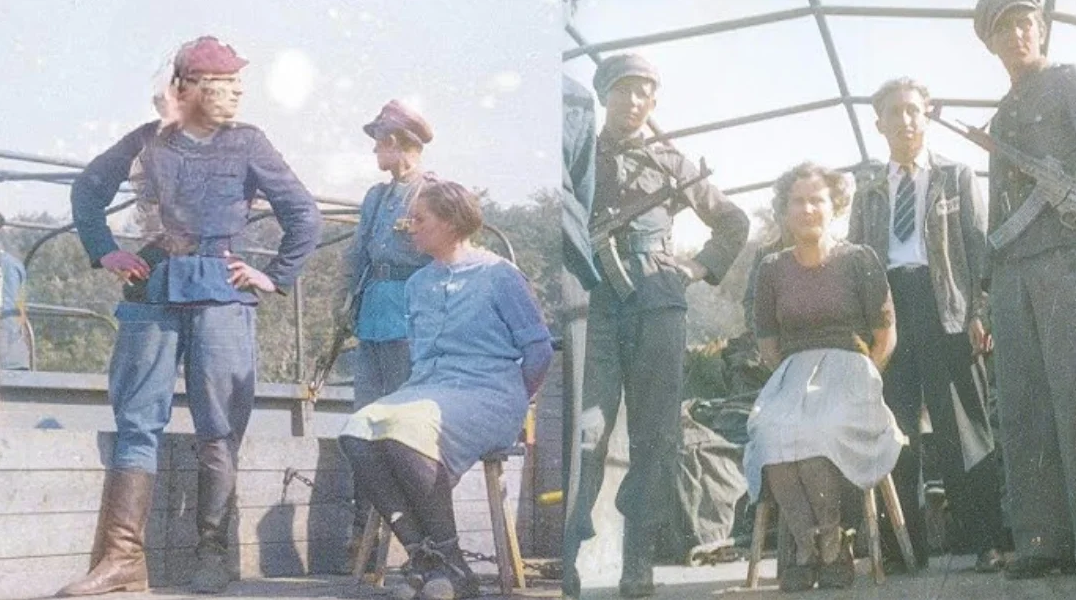
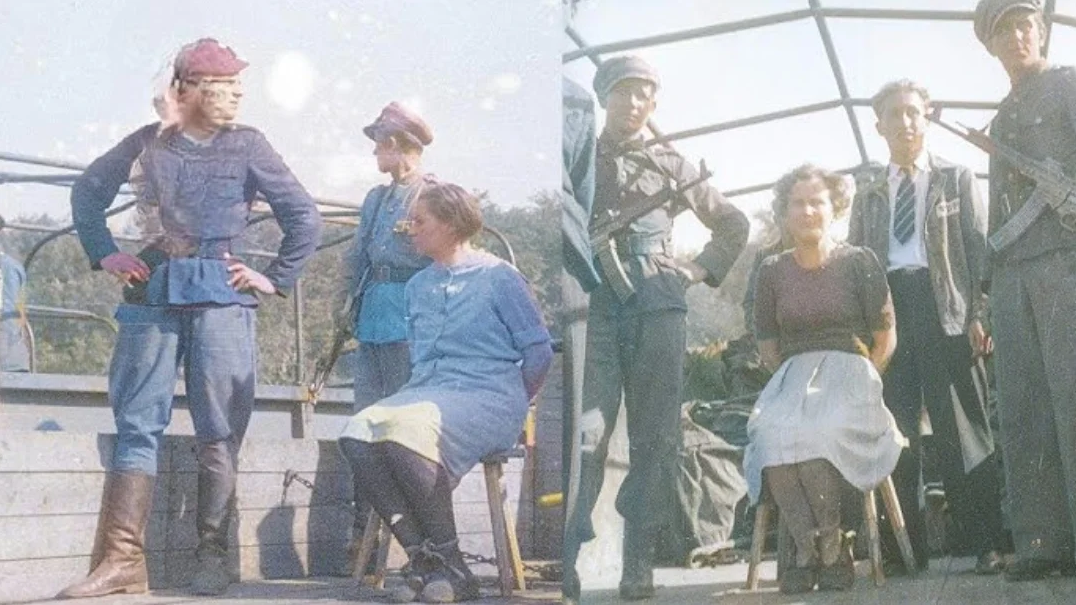
SIX FEMALE MONSTERS PAY THE PRICE: The Final Screaming Moments of 6 Nazi Female Guards – “THE VILE WOMEN OF STUTTHOF” Who Made Victims Tremble at Their Mere Mention _us5

Stutthof concentration camp, established in 1939 near Danzig (now Gdańsk, Poland), was a site of detention and forced labor under Nazi rule. The camp held more than 100,000 people, including Poles, Jews, and Soviet prisoners of war; many died between 1940 and 1945 due to disease, starvation, harsh living conditions, and systematic violence. This text is presented in an educational, descriptive manner, based on archival materials and postwar trial records, to honor the victims and support public understanding of legal accountability for wartime crimes.
Establishment and early purpose
Stutthof was created in a forested area near the village of Stutthof, about 35 km east of Danzig. During the occupation, Nazi authorities implemented policies to arrest and isolate groups viewed as threats to their control, including segments of Poland’s social leadership and intelligentsia. Preparations for detention sites—including arrest lists and location scouting—had begun even before the war.
The initial compound (often referred to as the “old camp”) was built in 1940 with prisoner labor and consisted of multiple barracks and controlled fencing. At first, the camp was used mainly to imprison Poles and exploit forced labor. Over time, its scale and function expanded as the war progressed, prisoner numbers rose, and living conditions worsened.
Expansion and detention conditions
From the early 1940s, Stutthof developed into a concentration camp operated within the SS system and became connected to a network of satellite camps that supplied forced labor to various sites. The guard force included both men and women, and later also auxiliary personnel.
Inside the camp, overcrowding, chronic food shortages, poor sanitation, and exhausting work severely weakened prisoners. Epidemics—especially typhus—broke out during the war years and caused extensive loss of life. Historical documentation also records organized killing practices associated with Stutthof and related facilities, further increasing the death toll.
Overall, Stutthof processed large numbers of prisoners across several phases and became part of the broader Nazi apparatus of repression in Eastern Europe.
Liberation and the Stutthof trials
In early 1945, as the front approached, the camp was evacuated. Many prisoners were forced to move under extreme conditions, leading to further deaths. The Red Army liberated the camp on March 9, 1945. After the war, survivor testimony and preserved documentation provided key evidence for prosecutions.
Trials connected to Stutthof were held in Gdańsk from late April to late May 1946, prosecuting former camp personnel on charges of war crimes and crimes against humanity. Many defendants were convicted; some received death sentences and were executed on July 4, 1946, while others were sentenced to prison terms. Additional proceedings in later years prosecuted further individuals associated with the camp system.
Legacy and educational significance
Stutthof’s history shows how the Nazi repression system expanded in Eastern Europe—from detention and forced labor to systematic violence against multiple victim groups. The postwar trials reflect efforts to establish legal responsibility, alongside the limitations of postwar justice, since not every perpetrator was prosecuted in the same place or time.
Today, memorial and museum institutions at Stutthof preserve artifacts and testimony for historical education, helping to remember the victims and to highlight the dangers of hatred, discrimination, and state-organized violence. This material is provided for awareness and remembrance, without sensational or graphic detail.