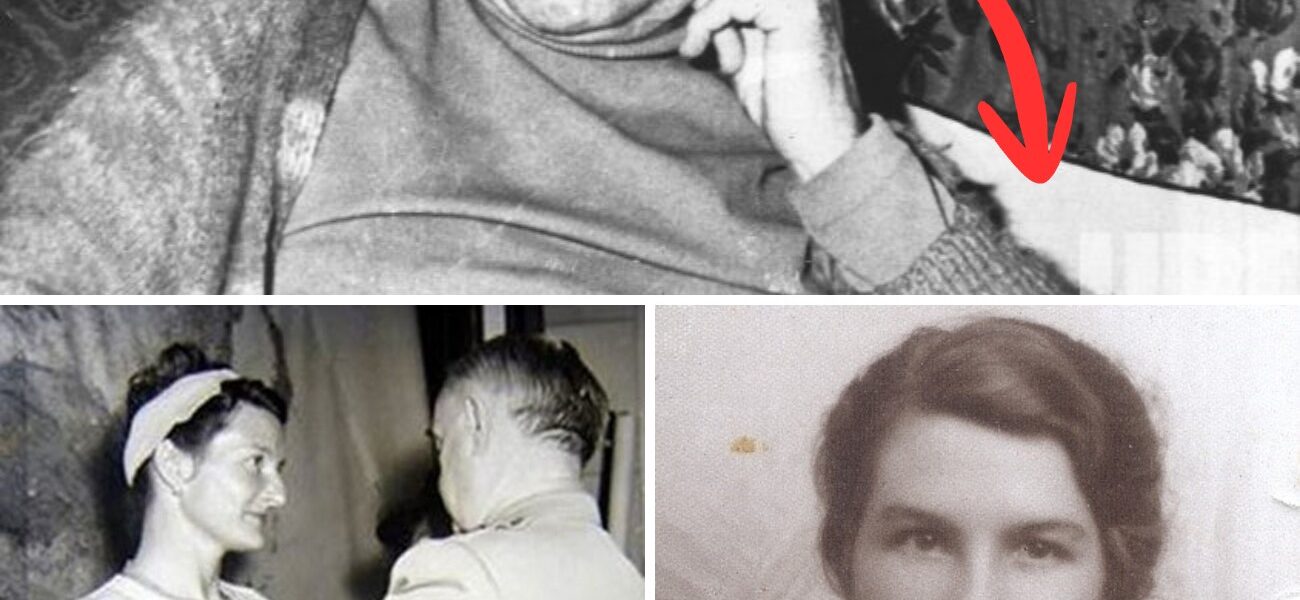

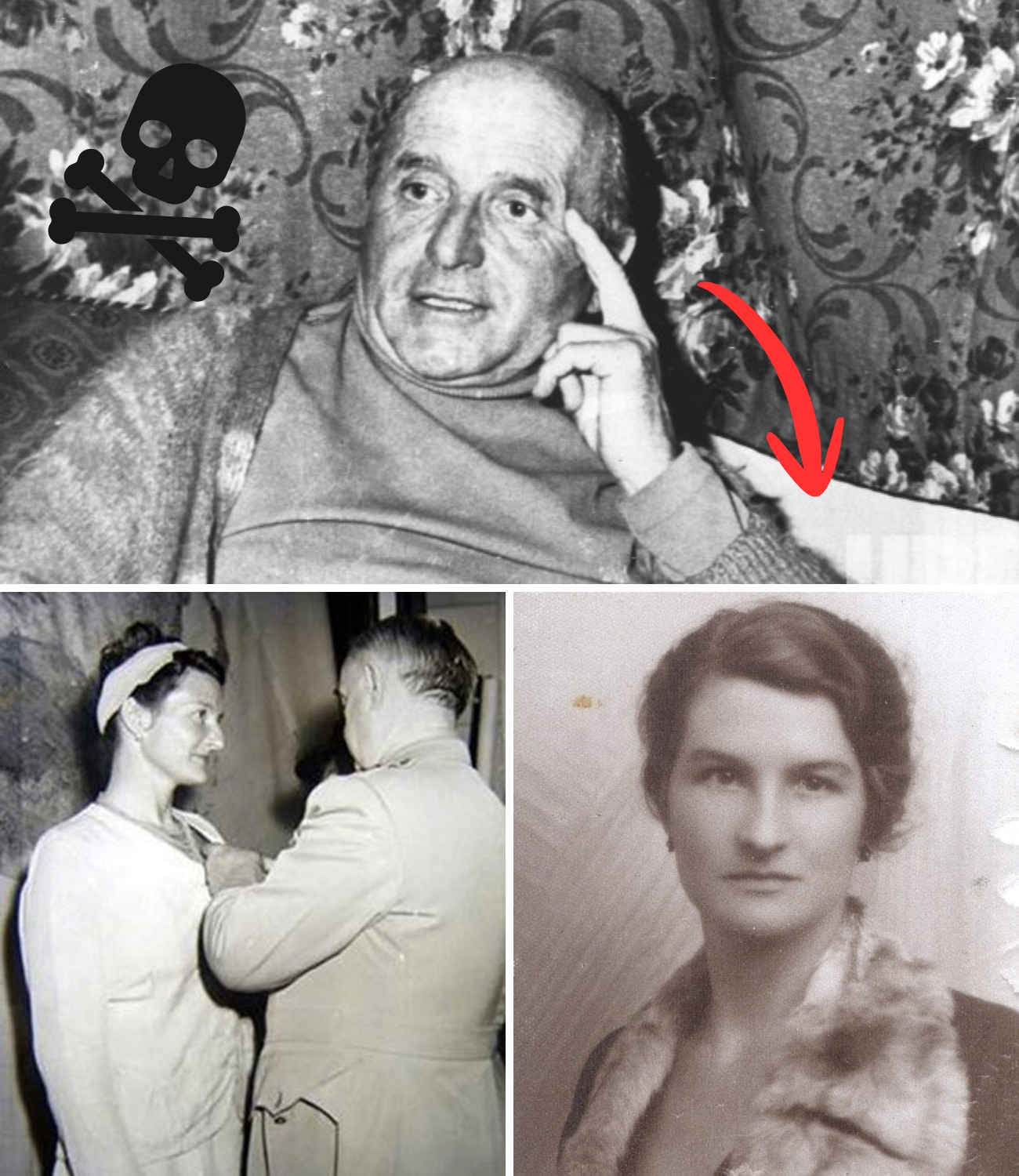
In war, the most dangerous tools aren’t always guns. Sometimes they’re forged papers, a bicycle, a suitcase of ration cards, and a person who knows how to move without drawing attention. In occupied France, one of the most effective Allied operatives was Virginia Hall.
To the Germans trying to find her, Hall wasn’t a single, fixed identity. She was a shifting trail: different names, different faces, different routines. Orders circulated warning agents about “the woman who limps,” describing her as a serious threat whose networks kept expanding. Yet even the forces tasked with crushing resistance in Lyon never truly understood who they were chasing.
That pursuit produced rumors, mislabeling, and anger—but it did not produce an arrest. Hall kept working, kept adapting, and kept disappearing before the net could close.
If you want to understand what real resistance can look like, it often starts far from dramatic scenes. In occupied France, survival could hinge on paperwork: a stamp that matched, a story that sounded natural, a route that avoided the wrong checkpoint, a neighbor who didn’t ask questions. Hall helped build systems that could hold under pressure—couriers, safe houses, escape lines, and compartmentalized contacts designed so that one failed link wouldn’t expose everyone.
Before the war, she aimed for a standard diplomatic career. She studied languages and European customs and pursued the U.S. Foreign Service. A serious accident, however, led to the loss of part of her left leg, and that ended her plans in the way official institutions often ended women’s ambitions at the time: with a quiet refusal. Hall didn’t waste energy arguing. She found another way to serve.
She joined Britain’s Special Operations Executive and entered France in 1941 as one of the first women sent into the field. Her work wasn’t about spectacle. It was steady, practical, and demanding: identifying reliable contacts, arranging safe shelter, coordinating messages, and supporting groups that often had different priorities and didn’t always trust one another. She chose Lyon—high-risk and heavily watched—because it mattered. In a city of rail lines, informers, and constant movement, she learned how to blend into the rhythm of everyday life.
As German pressure intensified, she escaped across the Pyrenees into Spain in winter, despite the physical hardship of traveling on a prosthetic leg. Many people would have seen that as the end of their mission. Hall treated it as a reset.
In 1944, she persuaded the American OSS to send her back into France, this time returning with a deep-cover approach designed to avoid attention. She relied on careful disguise, restrained behavior, and local knowledge—methods meant to keep her unnoticed while she supported resistance groups, helped organize communications, and contributed intelligence that aided Allied planning.
Hall’s story is a reminder that “invisibility” can be a form of strength. A safe house is logistics. A courier route is strategy. A false identity can mean the difference between freedom and capture. She didn’t need to win firefights to be effective; she needed systems that kept people moving and protected under occupation.
After the war, she received major recognition for her service, including the U.S. Distinguished Service Cross in 1945. She later worked with the newly formed CIA, where—like many women of her era—she encountered institutional limits that didn’t always reflect what she had already proven in the field. Even so, she stayed in public service, choosing the work over publicity.
Her legacy isn’t a single dramatic moment. It’s the persistence of careful, humane operational thinking under extreme pressure: reduce risk, protect others, and keep going—especially when you’re underestimated.